RG on the Road in Search of New Excellence
Some business trips go beyond the scheduled appointments, becoming opportunities to explore production facilities, delve into culinary cultures, and envision new opportunities for the future. This is exactly what happened to Giorgio Negri, founder and owner of RG, and his children Nicola and Camilla, who embarked on an intensive journey through Spain, from Galicia to Andalusia, passing through Madrid. They traveled about 1,500 kilometers by car, taking in vastly different landscapes, professional meetings, and exchanges that enriched the company’s wealth of experience.
The goal was twofold: to get an up-close look at a small family-run workshop specializing in handcrafted porcelain, with which to lay the groundwork for a new commercial agreement; and to visit, for the first time, the headquarters of a major manufacturer and distributor of professional-grade items—particularly glass and porcelain—with which our company has already begun a partnership. These are two companies that are profoundly different in size, organization, and production processes, yet united by a commitment to offering quality products and a continuous search for new solutions.
This itinerary reflects a philosophy that has always been central to RG Commerciale and RGmania: not merely selecting products from a catalog, but getting to know the people, processes, and expertise behind each item, in order to offer customers increasingly sophisticated, reliable, and diverse solutions.

In the heart of Galicia, where porcelain is still an art
The journey began on Monday, October 26, with a landing at the Asturias airport. From there, it was a more than three-hour drive to reach the heart of Galicia, along roads that wind through one of the greenest and most authentic regions of the Iberian Peninsula. A region made up of small towns, rural landscapes, and ancient traditions, also traversed by the routes of the famous Camino de Santiago.
It is precisely in this setting—where the artisanal craft of ceramics and porcelain finds expression in numerous local workshops—that RGmania identified a family-run workshop capable of blending tradition, experimentation, and an extraordinary attention to detail. Uncovering companies of this kind requires time, curiosity, and constant research, which often leads our team to explore areas far from the major trade show and commercial circuits.
It is no coincidence that this search so frequently takes us to Spain. For decades, the country has been one of the leading laboratories of the international gastronomic avant-garde: just think of the revolutionary contribution of brothers Ferran and Albert Adrià, or the Basque Culinary Center, a leading center for culinary research, education, and innovation. It is an environment where even the shapes of the dishes, the table setting, and the materials used in service become tools for creative expression, serving the chefs and their culinary identities.
Casting and molding: two different ways of producing porcelain
Our visit to the Galician factory allowed us to gain a deeper understanding of the characteristics of a particularly interesting production process. Not all porcelain, in fact, is made in the same way. Among the techniques used, slip casting and mold pressing differ in terms of time, processing methods, and design possibilities.
In pressing, the properly prepared ceramic slurry is compacted inside a mold by applying pressure. This technique is particularly well-suited for the mass production of specific shapes, as it allows for relatively rapid production cycles and good dimensional uniformity. In casting, on the other hand, a liquid slurry of ceramic raw materials is poured into a porous mold, usually made of plaster. The mold absorbs some of the water, allowing a solid layer to form gradually along the walls. After the necessary time has elapsed, any excess material is removed, and the piece must set before being removed, dried, and finished.
This latter technique, used by the company we visited, generally requires longer processing times than industrial pressing but offers considerable freedom in creating unique shapes, complex geometries, and objects with a strong design character. This is a valuable feature , especially in the context of contemporary dining, where the presentation vessel can become an integral part of the gastronomic experience.

From 3D Design to Hand Finishing
What impressed us about this company is its ability to handle the entire creative and production process in-house. It all begins with 3D design, including the development of 3D models and the subsequent creation of prototypes, leading to the finalization of shapes, the preparation of color mixtures, and the actual production.
Every piece is crafted with meticulous attention to detail: surfaces, edges, shades, and finishes are inspected and refined by hand, one by one. The workshop also offers bespoke customization options, allowing for the development of tailor-made solutions based on the aesthetic and operational needs of chefs, restaurants, and hospitality professionals.
The firing cycle, which consists of two stages, is also particularly noteworthy. The second firing reaches 1,400 °C, a temperature that promotes the vitrification and densification of the material, helping to produce a compact, low-porosity, and highly durable porcelain. The use of a relatively small kiln also allows for careful management of individual firing cycles, adjusting firing conditions according to the characteristics of the pieces.
Another distinctive feature concerns the management of raw materials. The ceramic mixture is prepared using very few ingredients, without adding any additives to the formulation demonstrated during the tour. Recoverable material is reintroduced into the production process, reducing waste and maximizing the value of the resources used. In practice, this is an approach in which artisanal precision, product quality, and a focus on minimizing waste all work in harmony.
Beyond the technical aspects, what made the visit truly memorable was, above all, the warm welcome from a family-run business that recognized in another family-run enterprise a partner with whom to share values, vision, and a dedication to craftsmanship. A spontaneous and warm atmosphere, capped off by a snack featuring a traditional local dessert: a small gesture that perfectly captured the essence of Galicia and the hospitality of its people.
Madrid: High-End Mixology and Innovative Presentation Styles
The following day, Tuesday, October 27, began with another long journey: about five and a half hours by car to reach Madrid. This journey also marked a stark change of scenery, from the green hills and rural landscapes of Galicia to the vast expanses of the central plateau, and finally to the urban energy of the Spanish capital.
The Spanish capital was also an important stop from the perspective of observing culinary trends. For a company that supplies professional equipment to bars and restaurants, visiting innovative establishments means gaining firsthand insight into how products are used, discovering new presentation styles, and understanding how customer expectations are evolving.
The first stop was Angelita, an internationally renowned cocktail bar featured on the list of The World’s 50 Best Bars. It is a venue where mixology is treated as a true laboratory of experimentation, combining research into ingredients, contemporary techniques, and a focus on the overall customer experience. An example of how the world of professional bartending continues to evolve, requiring increasingly specialized support and tools.
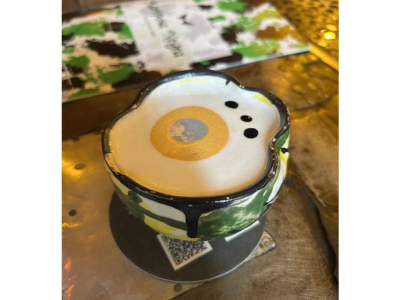
The evening continued at Rosi La Loca, a Madrid venue that, at the time of our visit, ranked at the top of TripAdvisor users’ preferences for dining in the city. Here, the dining experience stands out not only for the quality of the dishes but also for the extraordinary originality of their presentation. Plates, containers, and accessories become part of a visual display designed to surprise the customer, confirming just how blurred the line between cuisine, design, and entertainment has become today.

From the Atlantic to the Mediterranean, across Spain
The next leg of the journey—another five hours or so by car toward Andalusia—completed an itinerary that, over the course of just a few days, allowed us to traverse surprisingly diverse environments and landscapes, showing us just how much Spain’s character changes from one region to another.
The same variety is found in the culinary culture. The north, center, and south share a tradition of conviviality and small tastings, but interpret it through ingredients and preparations deeply rooted in their respective regions. In Galicia, the flavors of the Atlantic dominate, from seafood empanadas to pulpo a feira, the famous Galician-style octopus. In Madrid, you’ll find great classics like croquetas, calamares, patatas bravas, and tortilla de patatas. In Andalusia, on the other hand, gazpacho, salmorejo, pescaíto frito, and numerous other dishes take center stage, reflecting the sunny character of southern cuisine.
The common thread is tapas, understood not merely as a way of eating but as a true social ritual. Small portions meant to be shared—a relationship with food that prioritizes conviviality and the pleasure of getting together and spending time with one another. This vision shares many points of contact with Italian culture, where the dining table continues to represent a special space for identity, relationships, and tradition.
Italy and Spain, after all, share much more than a passion for gastronomy: the centrality of family, the importance of personal relationships, the value placed on local products, and a natural inclination toward hospitality—all aspects that emerged during the trip, both in business meetings and in the experiences of ordinary visitors. The warmth, friendliness, and helpfulness of the people we met accompanied us at every stop, making even such a demanding itinerary a pleasant experience.

Málaga, an Industrial Hub with an International Reach
Our arrival in Málaga—a city where the sea once again takes center stage, this time with the waters of the Mediterranean—marked the final stop of the trip, featuring a visit to the headquarters of a major company specializing in the production and marketing of products for the hospitality sector, particularly glass and porcelain.
This is a well-established company in Spain that is gradually expanding its presence in international markets. While a business relationship with RGmania already exists, this was the first opportunity to visit the company in person, gain a deeper understanding of its organization, and discuss prospects for further collaboration.
Compared to the Galician manufacturing scene, the production and commercial context is profoundly different. While in northern Spain the focus is on artisanal craftsmanship, attention to detail, and the customization of individual pieces, in Málaga we visited a larger facility, organized according to industrial and distribution principles, capable of managing diverse product lines and meeting the needs of different markets.
These are not opposing models, but rather two distinct opportunities for a company like ours. On the one hand, the opportunity to offer distinctive items, crafted using artisanal techniques and designed for custom projects; on the other, the chance to consolidate a broad, reliable, and competitive product range, supported by a production and sales structure with an international reach.
In Málaga, too, the welcome was particularly warm. The visit concluded with a dinner hosted by our hosts at a restaurant belonging to a well-known hotel chain in the city center. It was an evening of the highest caliber, both in terms of cuisine and setting: a penthouse on the fifteenth floor, with a spectacular view that took in the port of Málaga on one side and the cathedral—one of the city’s architectural landmarks—on the other. This was yet another demonstration of how, even in business relationships, the value of hospitality and mutual understanding can help build solid and lasting relationships.
From artisanal to industrial, with a single goal
The journey thus allowed us to traverse Spain not only geographically but also through two distinct approaches to production. From north to south, from artisanal to industrial, from small family-run workshops to structured companies focused on international markets. Different realities, united by a commitment to quality and a desire to continuously improve their offerings.
For RG, this comparison represents a fundamental part of the work involved in selecting and developing our catalog. The goal is not simply to expand the number of available products, but to build an increasingly diverse assortment capable of meeting the concrete needs of hospitality professionals. For us, this means complementing products intended for everyday use with original solutions, specialized craftsmanship, and customization options—all without losing sight of functionality, durability, and quality of service.
The fact that Giorgio, Nicola, and Camilla were all present at the same time also turned the many hours spent in the car into a valuable opportunity for internal discussion. Away from the daily grind of the business, we were able to discuss projects, strategies, commercial prospects, and ideas for the future with greater continuity. This aspect is less visible than visits to suppliers, but equally important for a family-run business where different generations collaborate to foster the company’s growth.

Returning to the company with new ideas and renewed energy
On Thursday, October 29, our return flight from Málaga marked the end of an intense, demanding, and inspiring trip. Three and a half days filled with meetings, long trips, factory tours, and opportunities for discovery—during which the fatigue was more than offset by the value of the experiences we had.
The return home brought with it insights, new ideas, and prospects for collaboration, all fueled by a renewed energy to invest in the company’s projects. The flip side of the coin is the confirmation of just how important it is to keep traveling, to meet producers in person, and to observe up close what’s happening in the places where industry trends and innovations are born.
After more than forty years in business, RG’s philosophy remains the same: the quality of service stems first and foremost from curiosity, relationships, and the determination to never stop seeking something new. And sometimes, to find new answers, you simply have to set out on a journey.