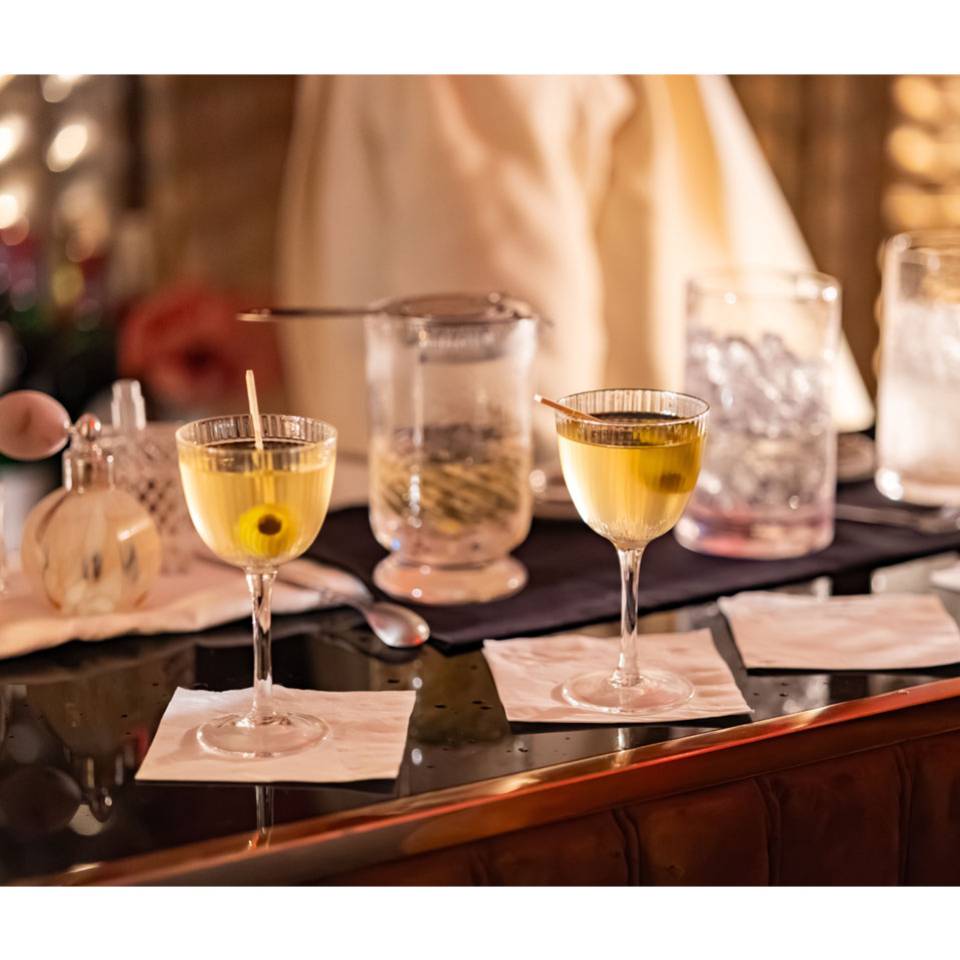
The evolution of the coffee bar from the 1990s to today
From coffee shops to cocktail bars
Over the past three decades, the world of the bar has undergone a profound transformation, almost a cultural revolution, that has changed the way we drink, socialize and experience hospitality. RGLife, the blog of RGmania, tries today to retrace its history and motivate why the restaurant world is increasingly shifting to the hotellerie.
In the early 1990s and for much of the 2000s, the landscape was dominated by traditional coffee shops: simple, everyday places where coffee was the centerpiece of the offering. The coffee shop was a morning hangout, a quick service place, and rarely went beyond a well-made cappuccino or an after-lunch bitter. Mixology was not yet widespread: the most popular cocktails were few and repeated - mojitos, spritzes, negronis - often prepared without particular research.
From wine to food pairing
At the same time, in restaurants, it was wine that dominated. The cocktail menu practically did not exist: gastronomy dialogued almost exclusively with the wine world, leaving distillates and mixed drinks a completely marginal role, relegated to a few end-of-meal classics.
Then, towards the end of the 1990s, something changed. A new focus on the quality of ingredients, as well as cocktail history and technique, began to spread. The first contemporary cocktail bars were born, places where mixing becomes art, where the bartender takes a central role and the customer expects an experience, not just a drink in the glass.
In this period, the first approaches to food pairing also begin: cocktails are no longer just aperitifs or digestives, but enter the gastronomic path. Pairings between aromas, flavors and textures are studied; the idea that a drink can converse with a dish as well as, or even better than, a glass of wine is explored.

The bar from dining spot to symbol of evolved hospitality
The revolution, however, really explodes in the 1910s. London becomes the global benchmark: it is here that luxury hotels-historically linked to the concept of the classic bar-are transformed into laboratories of innovation. Iconic cocktail bars are born or renovated within prestigious structures, setting new standards. In these contexts design and service, research, technique and storytelling come together to create immersive experiences.
From London, the trend spreads rapidly: Paris, Copenhagen, New York, Singapore, Hong Kong, and then gradually all over the world began to host cocktail bars of excellence, often located right inside five-star hotels. These places become destinations, real hubs of attraction for bartenders, enthusiasts and travelers.
This is no accident: these establishments already possess name and historicity, credibility and international reputation, elements that allow in-house cocktail bars to grow faster than independent venues. Thanks to this solid base, hotel bars are able to establish themselves and climb the world rankings in a surprisingly short time, becoming global landmarks.
Today, the contemporary bar is a complex and dynamic universe. It embraces the roots of coffee, the heritage of wine, the creativity of modern mixology and the gastronomic sensibility of food pairing. It has become a place where the beverage is no longer just a product, but a sensory, narrative and cultural experience.
In just thirty years, the bar has gone from being a simple dining spot to becoming a symbol of evolved hospitality. And this transformation is far from over: it continues to grow, experiment, and reinvent itself, just as it has done to date.

Why the world of catering is moving toward hotellerie
There are several deep and intertwined reasons why the restaurant world is increasingly shifting toward the hotellerie. Here is an analysis of the main ones:
1. Credibility and reputation already established
As we have already mentioned, hotels, especially luxury hotels, possess an international name, history, and reputation. This allows new in-house restaurants to leave with a huge advantage:
- greater media attention from day one
- international audience already in place
- immediate trust in the brand
- ease in attracting talent (chefs, bartenders, sommeliers)
An independent restaurant, even an excellent one, takes years to build the same kind of credibility.
2. Economic stability and financial support
Opening and then maintaining a restaurant or cocktail bar requires investment and constant liquidity. Hotels offer:
- greater capital, often derived from global chains
- superior economic sustainability (the room is the real profit engine)
- budgets for research, training, equipment, marketing
- less risk for managers and chefs, who can focus on the final product
In an industry as fragile as the restaurant industry, this is a decisive advantage.
3. Multi-level experiences
The hotel is a manifold of style, offerings and internationality, a place where loyal customers can always feel at home. In the same facility one can find from lounge bars to cocktail bars, from tastings to advanced pairing, from quality breakfasts to the possibility of private events.
This context allows chefs and bar managers to express themselves across the board, create multiple concepts, and increase value for customers.
4. Synergy between hospitality, design and storytelling
New generation hotels invest heavily in architecture and interior design, brand storytelling, and personalized hospitality.
Dining lives here in a much richer ecosystem than in the classic one, thus becoming immersive and multisensory.
5. More opportunities for careers, training and networking
Chefs, bartenders and wait staff find in hotels:
- more structured career plans
- ongoing training (often international)
- opportunities for relocation to other cities or countries
- greater contractual security
- access to a global network of professionals
All this makes the hotellerie much more attractive than independent catering.
6. Accelerated growth and global visibility
Hotel bars and restaurants have an easier time getting into international rankings (Michelin, 50 Best, Tales of the Cocktail); attracting press, bloggers, photographers; organizing collaborations with world-renowned professionals; becoming 'destinations' even for those not staying.
A strong name is in itself a shortcut to notoriety.
7. The quest for the 'hospitality experience'
The typical customer of the 1920s is no longer satisfied with excellent food or drink: he demands care, service, atmosphere, storytelling, hospitality.
Hotels are structurally designed to offer hospitality at a very high level, which an independent restaurant can do to a certain extent.
8. Hotels as 'urban ecosystems'
Many hotels are becoming true 'urban ecosystems,' where wellness and cultural events, sought-after bars and renowned restaurants are intertwined.
In this context, dining is no longer an ancillary service, but the beating heart of the guest experience.

In summary.
The world of catering is moving toward hotellerie because the hotel:
- offers resources, stability and security
- brings instant fame and credibility
- provides visibility and rapid growth
- allows the experience to be elevated to a more comprehensive and international level
- gives chefs and bartenders creative space and career opportunities
In hotels, catering is increasingly finding fertile ground to grow, innovate and establish itself on a global scale.